New Orchid Growers - AOS Beginner's Newsletters

Most of the AOS Beginner Newsletters were written by Greg Allikas and Kathy Figiel, some by Ned Nash and Greg Truex. These beginner newsletters were designed to address the issues facing all new growers and address many aspects of orchid growing. Photos and Newsletter Links courtesy of the American Orchid Society.
General Orchid Information

You've Received an Orchid as a Gift
It's Lovely and Exotic Sitting on the Book Case
Flowering orchids are best kept in a bright, airy place in the home away from direct sunlight and overly warm temperatures. For maximum flower life, maintain an even moisture level. (Jan 10)

What Kind of Orchid Do I Have?
The First Step - Identify Your Orchid
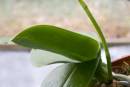
The first step in caring for your orchid is knowing whether it is a phalaenopsis, dendrobium, vanda, cattleya, oncidium, paphiopedilum or cymbidium. Most people who have just a few orchids will have a Phalaenopsis. (Jun 09)
An Orchid by Any Other Name
Have More Fun with Orchids Knowing Basic Names
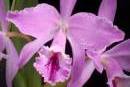
The reason is practical: your success as a grower will be helped a lot by knowing some basic names. Locating information on your plants can depend on correctly recognizing its type. (Oct 11)
Epiphyte or Terrestrial? Sympodial or Monopodial?
Types of Orchid Growth
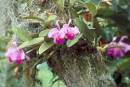
Most cultivated orchids are epiphytes (growing in trees or on rocks rather than in the ground) and sympodial (growing sideways while monopodial orchid plants grow upwards).
(Aug 09)

What to Look for When Buying an Orchid Plant
Reading Your Plant Label: Key to an Orchid's Heritage
Pick up a plant label from one of your plants. Most likely, the name will consist of at least two words. The first word is the name of the genus (think of it as a person's last name e.g., Smith). (Sep 09)
Keep Your Orchid Plant Labels
Plants Names Distinguish Their Genus and Species
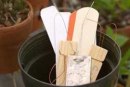
For scientific reasons, all plants have names which distinguish their genus and species. Frequently, individual plants are given a third name.
(Nov 11)

New Years Resolutions
Three Resolutions for New Orchid Growers
1. Don't Overwater - put your finger in the mix, if it feels wet, it is, let the mix dry. 2. Buy Mature Plants - choose a the plant in bloom, seedlings are harder to grow.1 3. Visit Your Local Orchid Society
(Jan 12)

The Importance of Staking
Stake for the Best Flower Display
Orchids growing in the wild don't have the benefit of a caretaker to primp and preen them. But their only purpose is to attract a pollinator, not please us humans.
(Apr 12)
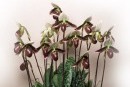
Orchid Collecting
Have Flowers in Every Month of the Year
There is no right or wrong way to collect orchids, but there are some things to consider that will give you the most bang for the buck. And some guidelines for selecting plants that may keep you from wasting your money.
(Feb 11)
Growing Your Orchids - Orchid Culture Basics

I've Got This Orchid... Now What Do I Do?
Six Easy Tips to Keep Your Orchid Alive
The importance of water, light, temperature, fertilizer and potting for growing phalaenopsis, or Moth Orchids, the most popular orchid for the home. Click here if you are not sure of what kind of orchid you have. (Jul 09)
Spring Has Sprung
Time to Start Repotting
Today is the first day of spring and for orchid growers, that means our orchids will be commencing their annual growth cycle soon. The most important task we associate with spring is repotting our plants. (Mar 12)

What Makes Orchid Roots Different?
Why Special Potting Mixes are Necessary
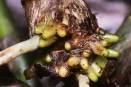
Orchid roots are different from the roots on common house plants, in part because of the spongy velamen layer, and require potting mixes that allow enough air around the roots. (Oct 09)
Why Won't My Orchid Rebloom?
How to Tell if You're Getting Enough Light
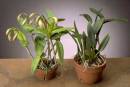
The number one reason that orchids don't rebloom is that they're not getting enough light. Here are some quick ways to check your light levels, and the SAOS has a light meter for you to be sure! (Nov 09)

Once More with Feeling
How and When to Water Your Orchid
Pseudobulbs on orchids like cattleyas store energy & water and prefer a wet dry cycle. Fleshy leaved orchids like phalaenopsis only have their fleshy leaves so they prefer to be more evenly moist. (Feb 10)
Feed Me
How and When to Fertilize Your Orchids
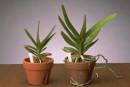
Everyone has a favorite fertilizer or supplement. How you fertilize depends on what kinds of orchids you grow and how and where you grow them.
(Apr 10)
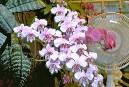
Give Me Some Air
The Importance of Humidity and Air Movement
Heating and air conditioning both dry the air significantly, try adding humidity trays or a humidifier. Orchids adore constantly moving fresh air, crack open a window and add fans to keep air moving. (May 10)

Putting It All Together - It's A Balancing Act
Growing Orchids Requires a Balance of Cultural Elements
You must balance light, water, nutrients and air. The best orchid growers know that if they increase or decrease one of these elements, they will have to adjust the others accordingly.
(Jun 10)
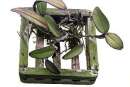
Talking to Your Orchids
Recognize Your Orchid's Symptoms
Our orchids talk to us, we just have to understand what they are saying. Learn to recognize orchid symptoms,
both benign and acute, what they mean and how to treat them when necessary.
(Jul 10)
Growing Different Types of Orchids

Phalaenopsis
A Springtime Favorite
If you are new to the orchid hobby, your first plants are likely Phalaenopsis. The moth orchid has become the darling of the commercial pot plant market for orchids. And for good reason. (May 11)

Cattleyas
Queen of the Orchids
Although phalaenopsis may be responsible for the current popularity of orchids as house plants, for many people, the image of an orchid flower is a Cattleya, such as Cattleya schroderae pictured at left. (Jun 11)

Dendrobiums
D is for Diversity
Dendrobium is a vast and diverse genus of orchids found throughout Asia and the Pacific Islands. There is a species or hybrid for nearly every taste or growing condition. (Jul 11)
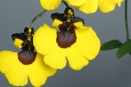
Dancing Ladies
Oncidiums and Its Hybrids
While phalaenopsis are elegant and cattleyas are flamboyant, oncidiums are fun. Oncidiums come in many forms and, as a result, go by various nicknames: Spider Orchids, Pansy Orchids, Dancing Ladies. (Aug 11)
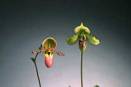
Lady Slippers
Basic Culture of Paphiopedilums
The lips of paphiopedilums are pouches which make them easy to recognize. Because the pouches in some paphiopedilums resemble footwear, they are informally called "lady slippers." (Sep 11)
Orchid Pests and Diseases
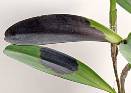
Is There a Fungus Among Us?
Black Rot During the Hot, Rainy Season
Based on past experience we have come to expect an outbreak of black rot under these type of wet, humid conditions. Pythium ultimum (and/or Phytophthora cactorum) is ruthless and can destroy a collection. (Jun 12)
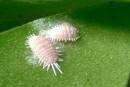
Those Lousy Little Suckers!
Dealing with Aphids, Mealybugs and Thrips
The most commonly encountered insect pests...aphids cause damage to plants by sucking fluids from them... mealybugs are closely related to scale and feed on plant juices... thrips are the most insidious. (Aug 10)

A Scaly Problem
Search and Destroy Mission
Colonies of scale can become entrenched at the base of a pseudobulb or under sheaths. You may not notice until the pests have done their damage. While scale can be found on flat surfaces of leaves, the worst damage is done at the base of pseudobulbs. (Sep 10)

Small Bug = Mitey Big Problem
Mites Can Wreak Havoc
Unless you have really good eyesight and a strong magnifying lens, you may never even see a spider mite. The first thing that will alert is the silvery stippling on the underside of orchid leaves. (Oct 10)
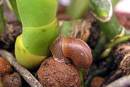
End of the Year Slug Fest
Dealing with Snails and Slugs
Slugs and snails feed mainly at night, or on dark days. Their damage is easy to spot. If you find irregular holes with smooth edges in leaves and flowers you should suspect slugs or snails as the culprit. (Dec 10)

Weeds
Can Spread Through Your Orchid Collection
While weeds will grow quickly on their own, they can be even more vigorous if you fertilize your orchids regularly as you ought to. Eventually the weed roots can completely fill a pot and use up all of the water and nutrients intended for your orchid. (Mar 11)
Seasonal Orchid Care